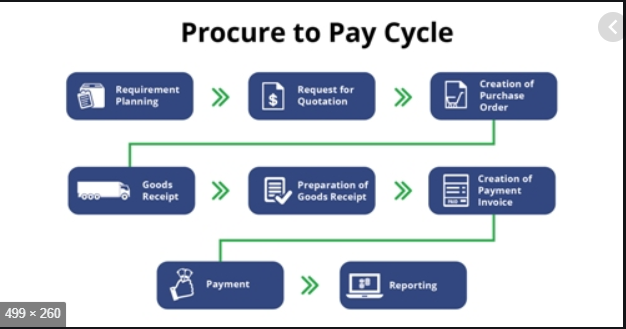
One of the most important business concepts in most organization is the concept of procure to pay (P2P). In most business scenario in order to excel one needs to clearly understand the concept of procure to pay (P2P). This is because analysing the processes involved in procure to pay will help you analyse how you can reduce cost and also how you will be able to generate more revenue. Below are the steps involved in procure to pay:-
- Raising a requisition requesting for quotations: Initially when you realize that you are out of items in your inventory you raise a requisition for the item requesting for quotation from different suppliers.
- Quote Analysis: – Once you receive the quotes from different suppliers you analyse the various quotes and try to understand which quote will be the best quote for your organization. There can be various factors involved for quote analysis which includes price, logistic time, reputation from suppliers, quality of the product, the type of service the supplier is providing.
- Raise Purchase order: – Once you have analysed the best quote from the suppliers you raise a purchase order. This is typically done by the buyer Now there can be various types of purchase order which are: –Standard PO: – It is the most basic and widely used among different types of purchase orders, it is created when a buyer is sure about the order details such as the item, price, delivery schedule, payment terms etc .Contract PO: – It is created for a set period of time (often for a year) the item, pricing, quantity etc. can’t be anticipated precisely. Blanket PO: – It is used in cases where the item is known, but quantity and required delivery schedules are unknown. Planned PO: – It is used for a planned purchase anticipated for long-term where the delivery schedule is not known in advance. The dates of delivery can only be anticipated therefore only tentative dates are provided to the seller. Item, pricing and quantity are however known in advance.
- Receipt:- Once PO has been raised the supplier receives the PO and gather the item after which the items are sent to us. Thereafter we receive the items. Item is checked for defects after which we receive a receipt from the supplier which states how much we need to pay
- Creating Invoice: Once the supplier has provided the materials he will provide a receipt which states how much we need to pay and thereafter we will create an invoice after which we will make the payment to suppliers.
- Update in Ledger:- Once payment is done you need to update the transaction in your general ledger.
The concept of Procure to Pay(P2P) is used in almost every organization. Even when you want to implement your business you need to clearly understand the various aspects of Procure to Pay (P2P) then only you will be able to implement it properly and fully utilize the benefits of ERP.
 sam
sam 